Run it smarter . Coming soon
Inventory, ordering, labor and food cost
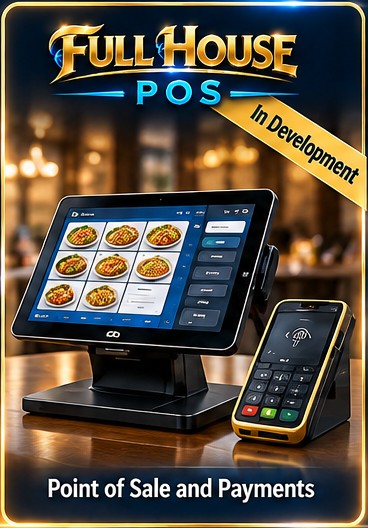
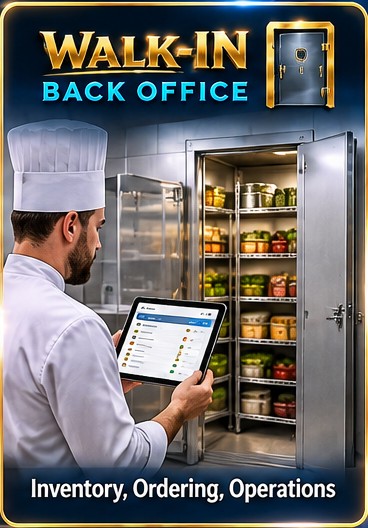
Coming soon: we are building our own Full House back office, connected to our own point of sale. Until it launches, everything else in the formula works without it.
Most restaurant marketing programs stop at the front door. This one goes into the back, where the money is actually won or lost. Food cost, inventory, purchasing, vendors and labor are managed in the same place your sales are, so the two halves of the business finally look at the same numbers.
Food cost, down to the recipe
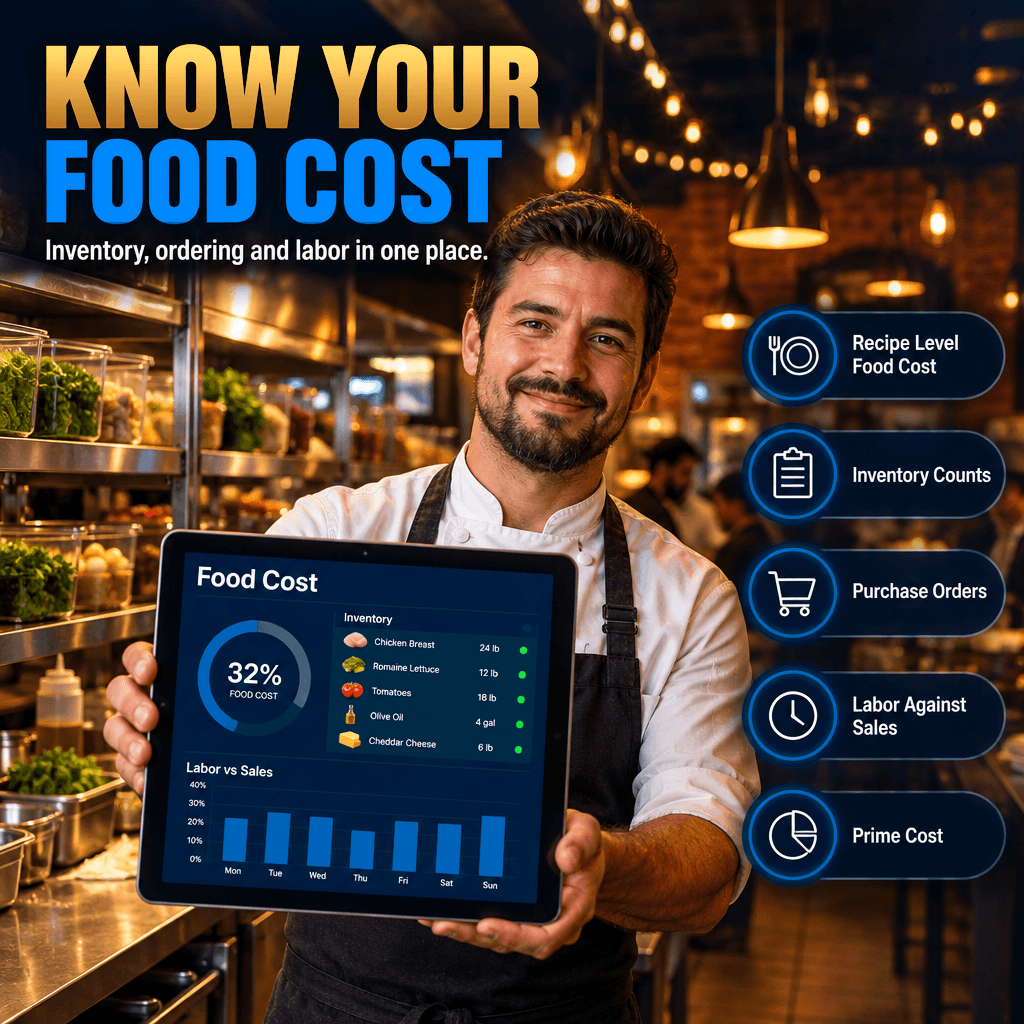
Every menu item is built from its ingredients with a cost attached, so you know what each plate costs you and what it earns. When a vendor raises a price on a case of chicken, the cost of every dish containing chicken moves with it and you see it the day it happens rather than at the end of the month. This is the difference between running a menu and guessing at one.
Inventory that is counted, not estimated
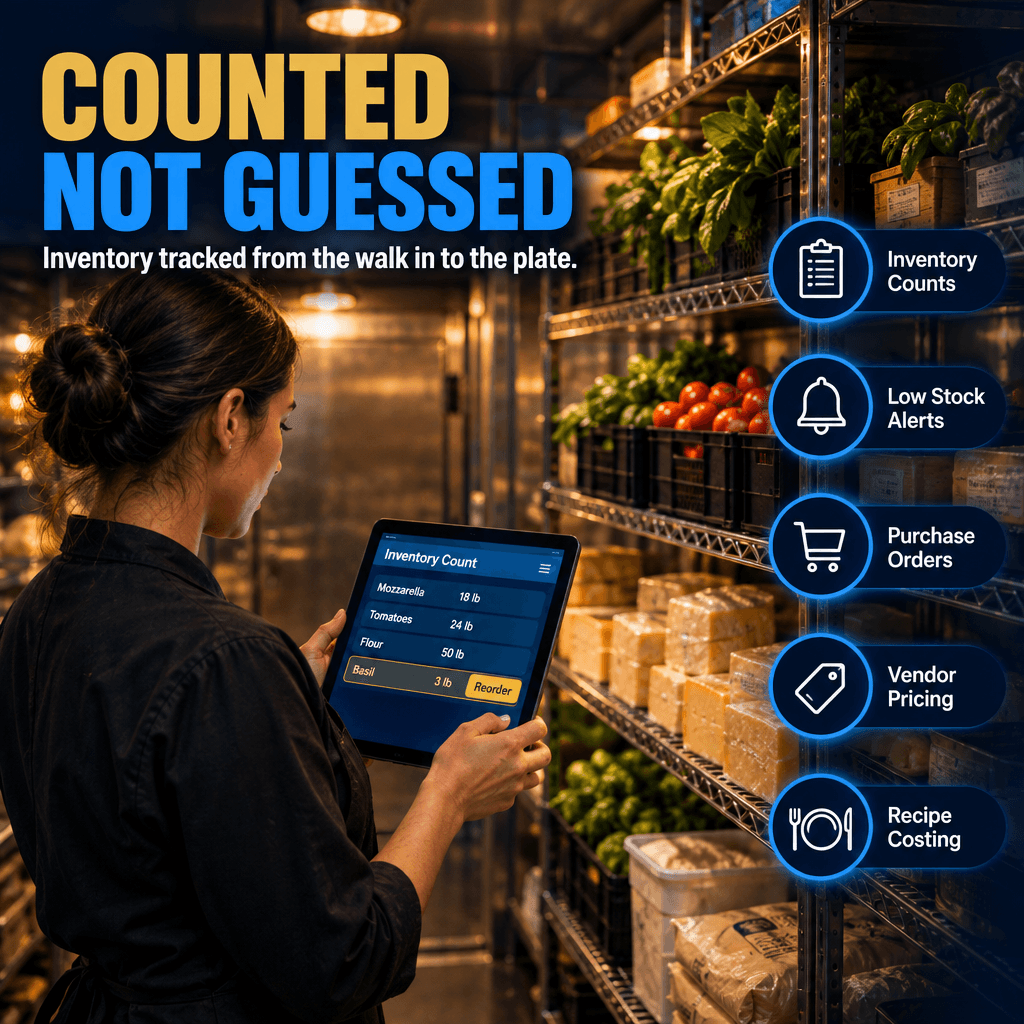
Item level counts with units, cases, pars and waste. Theoretical usage against actual usage, so the gap between what you should have used and what you did use is visible, and that gap is where shrink, over portioning and waste all show up. Counts can be done on a phone by whoever is on the floor.
Purchasing and vendors
Purchase orders generated from your pars, sent to the vendor, received against the invoice, and priced against what was quoted. Vendor records with contacts, terms, order guides and price history, so you can see which vendor has been quietly creeping up on you over six months.
Labor against sales
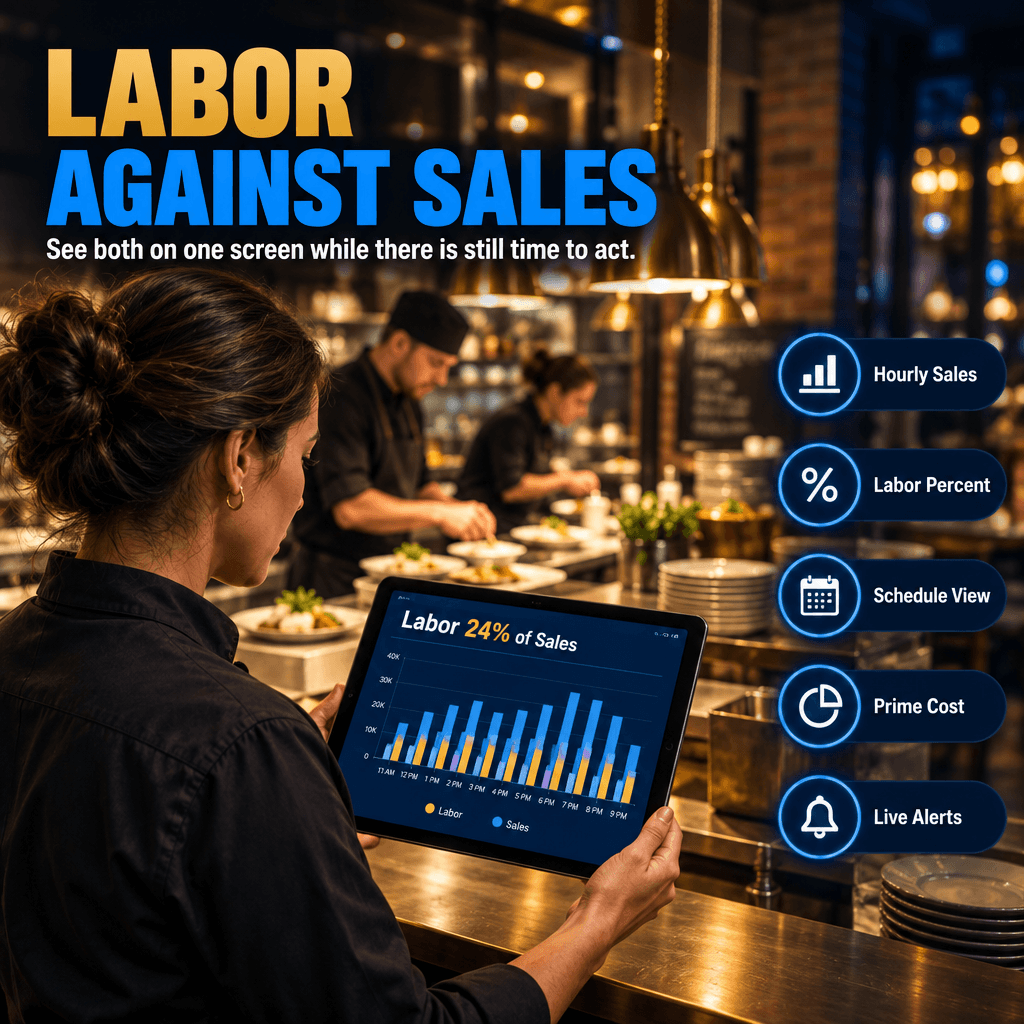
Scheduling, time clocks, overtime warnings and labor cost shown as a percentage of sales for the shift you are standing in rather than the one you closed last week. A manager who can see labor drifting at two in the afternoon can do something about it. A manager who finds out on Monday cannot.
Prime cost in one place
Food cost and labor cost, the two numbers that decide whether a restaurant makes money, tracked together and against sales, by day, by shift and by location. This is the report an operator actually runs the business on, and it is the reason the back office belongs inside the program rather than in a separate application nobody opens.
Switched on
What is actually included in this part
This part is coming soon. Here is what it will include.
- Recipe level food costing on every menu item
- Ingredient costs that update your plate costs when a vendor price moves
- Item level inventory with units, cases, pars and waste
- Theoretical usage against actual usage, so shrink is visible
- Purchase orders generated from pars and received against the invoice
- Vendor records with terms, order guides and price history
- Scheduling, time clocks and overtime warnings
- Labor cost as a percentage of sales, live rather than after the fact
- Prime cost by day, by shift and by location
- Counts and approvals from a phone, on the floor
What it changes about your week
You find out that a dish you have been proud of has quietly stopped making money, and you find out in time to do something about it. That is the whole argument for the back office, and no amount of front of house marketing replaces it.
Keep going
See what this would look like for your restaurant
A short conversation, your menu, and an honest read on whether this fits what you run. No obligation and nothing owed if the answer is no.